Peter Friedrichsen is a Toronto-based photographer and alternative process printmaker known for his experimental approach and minimalist aesthetic in image making. His work reinterprets historical photographic printing techniques, exploring how materials, surfaces, and processes shape the interpretation of the image.
He is an active member of the alternative process printmaking community, with a focus on sustainable methods. His work has been exhibited locally and internationally, and has been featured in several articles and book publications within the alternative photography community. As a current member and past Chair of Propeller Art Gallery, he remains actively involved in Toronto’s arts community.
Following are prints prints from experimental processes.
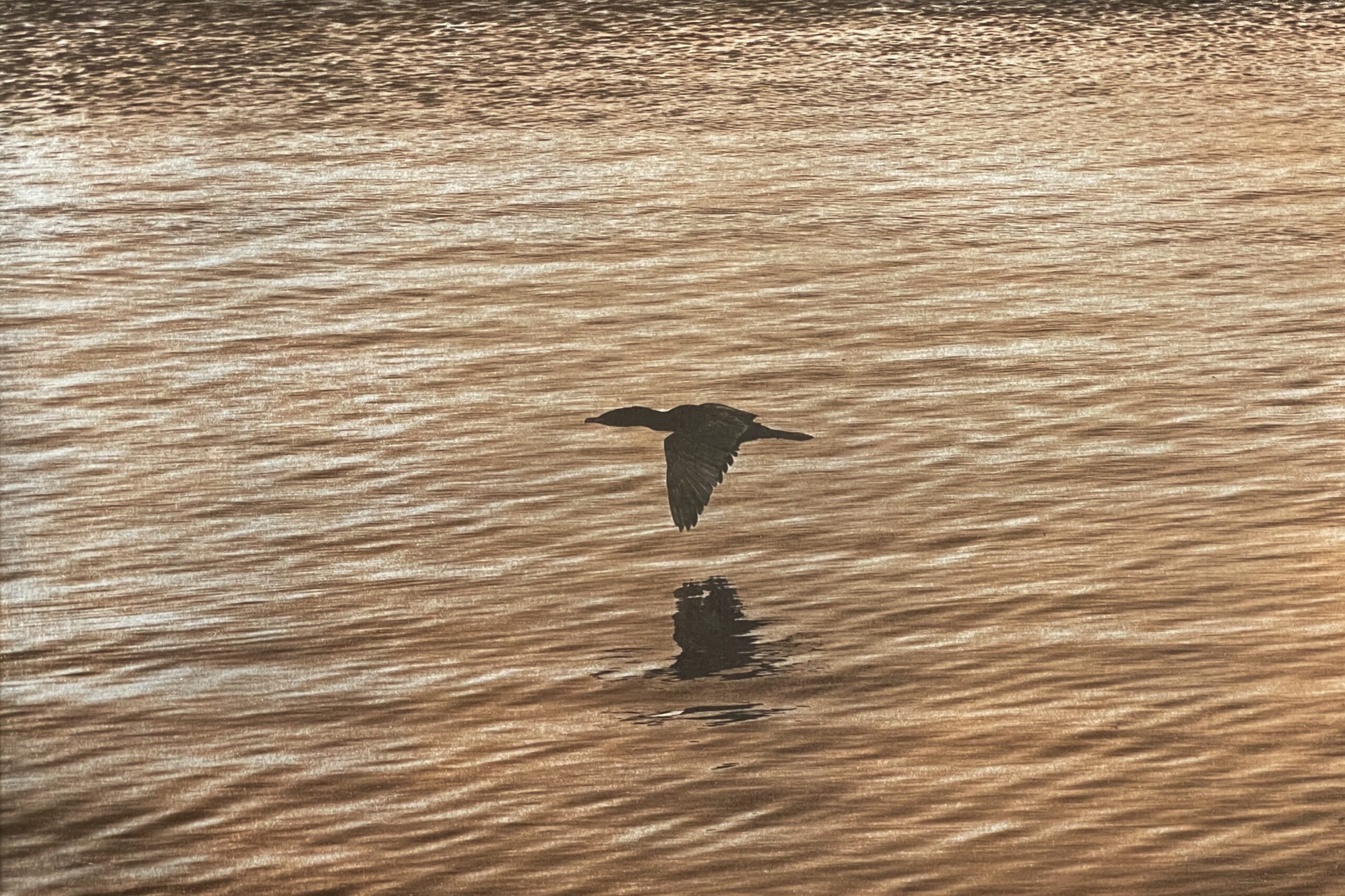
Reflected (2026)
Charcoal and brick in wheat (CHIBA)
Reflected is from a recent exhibition. Plant proteins are utilized as a light-sensitive pigment binder, hardened differentially by the degree of light exposure. Charcoal and brick gathered from a local site were ground, and formed the basis for the pigments imbuing an earth-toned colour palette.
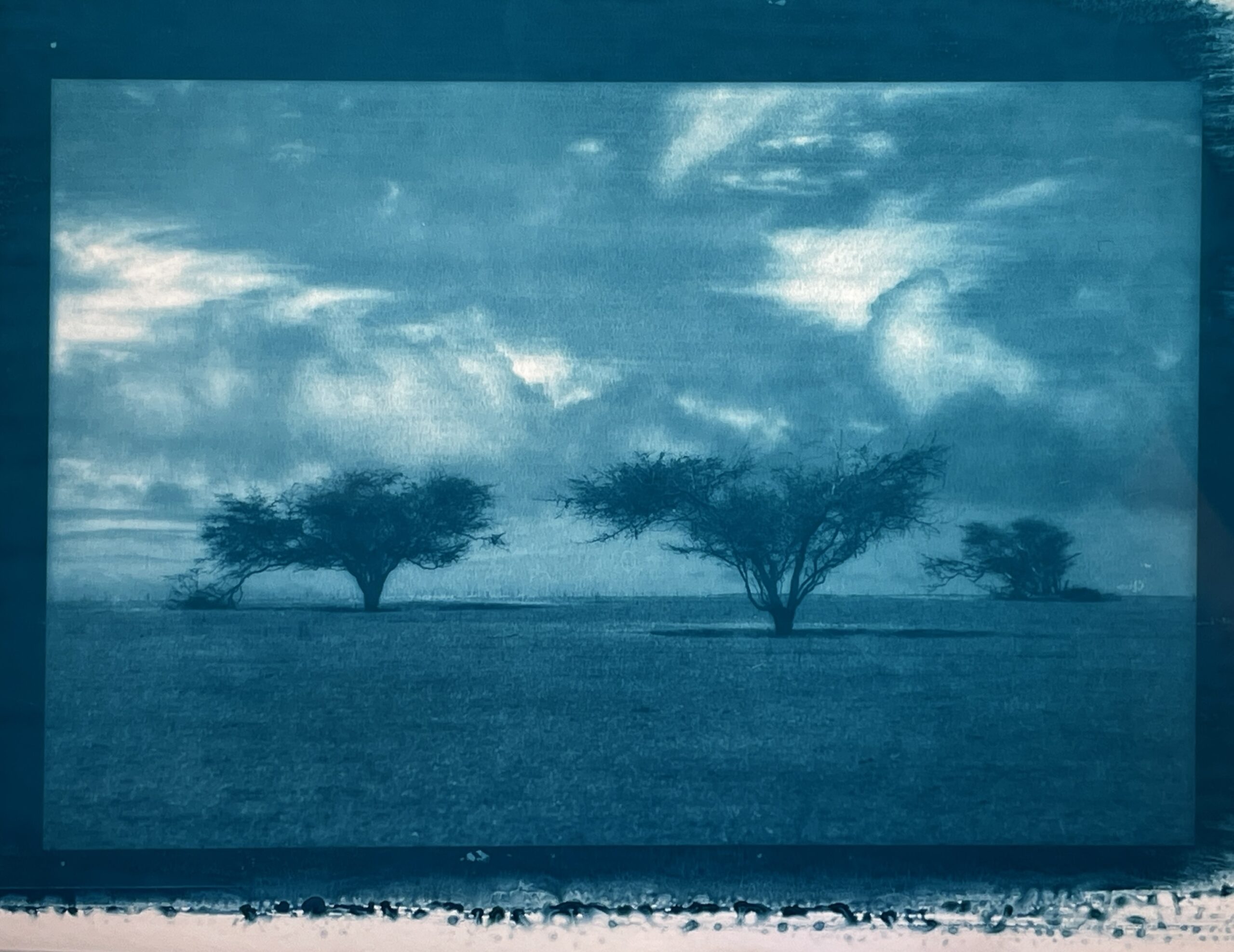
Island Trees (2026)
Phthalo blue and carbon black in PVOH-SbQ
This is from a recent experiment on back-exposed glass using PVOH-SbQ as colloid, and a pigment mix. The emulsion is made up with a light-sensitized polyvinyl alcohol using a compound called SbQ. It has been used in the silkscreen and other industries. Its use in alt-photography was first published in an article written by Kees Brandenburg and Simone Simoncini in 2024 and giving it the name zerochrome-SbQ. It has low toxicity, long shelf life, and is very fast to expose, in full sun taking 1-10 seconds. It is not a drop-in replacement for gum-bichromate but some printmakers have been quite successful when process techniques are adjusted to accommodate its unique properties. I am continuing to explore this emulsion.

Ferric-Gum Print (2011)
The only Ferric-Gum tri-colour print known to exist.
This is print followed an experimental process developed by Michael Andrews, the inventor of Ferric-Gum. He developed it in the late 1970’s, and followed with a published article in the Royal Photographic society’s Photographic Journal in 1983. While it shares the ability to bind pigments with gum after exposure to light as in gum-bichromate, it is instead, a positive process, eliminating the issue of unstable top down exposure . Unfortunately it needs iron to bind the pigment so it cannot be easily removed without destroying image integrity. Article here

New Mexico Train (2009)
Casein Print (CHIBA)
This was printed during my early explorations into the CHIBA process, a non-toxic alternative to gum bichromate. I continue to use this system today but rather, incorporating plant proteins as the light-sensitized colloid.